Spanish Hotel Chains To Curtail Operations In Cuba

Facing an imminent threat of U.S. sanctions, two major Spanish hotel companies, Iberostar and Meliá Hotels International, have announced that they are shutting down key business operations in Cuba. The news comes during a time of great uncertainty in Cuba along with a tremendous drop in tourism to the island, the largest in the Caribbean.
Meliá said today that 15 of its 34 properties in Cuba would be affected, among them the Gran Hotel Bristol Havana Vieja, INNSiDE Catedral Habana, the Meliá Buena Vista, the Sol Caribe Beach and the Sol Varadero Beach. The 15 affected hotels were managed in a joint venture with the Cuban military’s administrative conglomerate, Grupo de Administracion Empresarial S.A. (GAESA) and its subsidiary Gaviota, which run much Cuba’s tourist sector.
The Meliá Habana and Meliá Cohiba hotels, each of them home to Casa del Habano cigar stores, are not affected by this withdrawal, and will remain open.
Meliá noted in a statement released today that the decision “reflects a combination of external circumstances beyond Meliá’s control, which have materially affected the operational, legal, and security conditions necessary to ensure the proper delivery of services at these properties.”
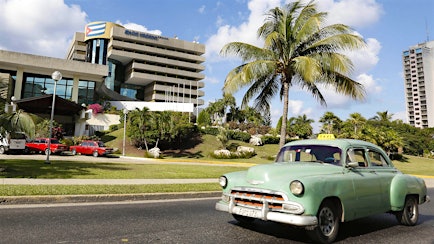
This announcement follows yesterday’s decision by Iberostar to curtail its operations in 12 hotels and resorts that operate under the Gaviota umbrella, among them the popular Hotel Grand Packard that overlooks El Morro castle, and Havana’s newest high-rise hotel, the Iberostar Selection Habana, also known as the Torre K, now the tallest building in Cuba’s capital city.
Some of these properties were already closed or partially closed given the lack of electricity and tourism on the island. The Cubans are likely to assume full control of the hotels for now, but their ultimate fate is uncertain for now. (For more on Cuba’s current struggles, see the latest episode of the Cigar Aficionado Podcast, below.)
The decision by the Spanish hotel chains to curtail business operations on the island has been expected since early May, when the Trump administration announced a series of “secondary sanctions” on foreign companies and individuals who do business with sanctioned Cuban entities. A State Department decree on May 7 designated GAESA and Gaviota as sanctioned state entities, and the Treasury Department’s Office of Foreign Assets Control advised affected foreign companies to “wind down transactions involving GAESA” by June 5, or face penalties on financial and commercial transactions with the United States.
Two other international resort companies, the Asia-based Archipelago International, and Canada’s Blue Diamond Resorts Cuba which managed 62 properties on the island, have also announced they are pulling out of Cuba.
The announcements by Melia and Iberostar come just days after the Spanish airline carrier, Iberia, announced that it would halt its transatlantic flights to the island because of the inability to refuel its planes in Havana and dwindling demand for travel to the island. Other major carriers such as Air Canada and Air France have also announced suspension of flights.
Amidst an escalating economic crisis that has evolved since the Trump administration began blocking oil shipments to Cuba earlier this year, the island’s tourism industry has all but collapsed. Only 36,000 travelers arrived In March, the Wall Street Journal reported last week, compared to an average monthly rate of 400,000 visitors per month in 2017 and 2018. Travel is down 48 percent this year, compared to 2025.
According to veteran Cuba tour guide Christopher Baker: “tourism has fallen off a cliff.”
Read Next: Cuba Runs Out Of Gas: $100 Million In American Aid May Follow