Cuba Runs Out Of Gas: $100 Million In American Aid May Follow

Cuba has exhausted its imported oil reserves and run out of fuel needed to power its electrical grid and enable economic functions. "We have absolutely no fuel [oil], and absolutely no diesel,” Cuba’s Minister of Energy, Vicente de la O Levy, announced on state television this week, noting that the country’s electrical grid faced a “critical” situation. “We have no reserves.”
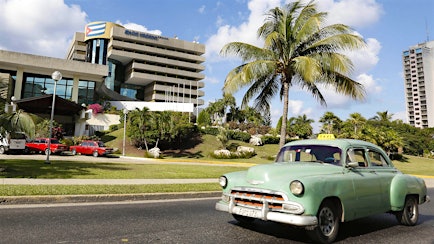
Energy shortages have led to expanded blackouts of up to 22 hours a day across the island nation. On May 12, an estimated 65 percent of Havana lacked electricity. As the humanitarian crisis deepens, scattered street protests by frustrated Cubans yelling “turn on the lights” were reported this week by various news organizations.
Cuban authorities have blamed the shortages on an oil blockade imposed by the Trump administration after the U.S. military operations to seize Venezuelan president Nicolas Maduro in January; the U.S regime change operations resulted in the termination of oil shipments that Maduro’s government had supplied to Cuba. On January 29, President Trump issued an executive order threatening punitive tariffs against any nation that supplies oil to Cuba.
Since then, only one tanker has been confirmed to deliver oil to Cuba, the Russian-flagged Anatoly Kolodkin, which ported in Matanzas in late March carrying 730,000 barrels of crude. “Cuba is open to anyone that wants to sell us fuel,” de la O Levy reiterated on May 13, but noted that U.S. pressure was blocking Cuba’s efforts to purchase petroleum abroad. "The heat continues to rise, and the impact of the blockade is indeed causing us significant harm,” he said, “because we are still not receiving fuel."
In recent weeks, the Trump administration has increased economic pressure and military threats against Cuba. On May 1, the President issued another executive order “imposing sanctions on those responsible for repression in Cuba and for threats to United States national security and foreign policy.” The order expands restrictions on commercial and financial transactions with Cuba and imposes “secondary sanctions” on foreigners doing business with Cuban entities designated as “blocked” by the Secretary of State. Under the new executive order, on May 7 Secretary of State Marco Rubio designated the Cuban military’s administrative agency, GAESA, which controls much of Cuba’s tourism sector, and MOA Nickel SA, a joint mining venture between the Cuban Nickel mining company and the Canadian mining corporation, Sherritt International, as blocked commercial entities.
In response to the threat of sanctions, Sherritt—the company is one of the oldest and largest foreign investors in Cuba—has announced it will close its mining operations on the island. The new executive order also threatens the future business operations of the Spanish Melia and Iberostar hotel chains which conduct business through GAESA and its subsidiaries.
The Trump administration has also stepped up its threat of military intervention against the island. On May 10, CNN reported that “U.S. military intelligence-gathering flights are surging off the coast of Cuba,” and that in recent weeks “the US Navy and Air Force have conducted at least 25 such flights using manned aircraft and drones.”
This week, however, there were some signs of change. President Trump posted on social media that “Cuba is asking for help, and we are going to talk,” and in a press release on May 13, the U.S. State Department announced that it is offering “$100 million in direct humanitarian assistance to the Cuban people,” that would be distributed through the Catholic Church and other independent humanitarian agencies.
Yesterday, Cuba’s President Miguel Díaz-Canel appeared ready to accept the offer. “If the U.S. government is truly prepared to provide aid in the amounts it has announced—and in full conformity with universally recognized practices for humanitarian assistance—it will encounter neither obstacles nor ingratitude on the part of Cuba, however inconsistent and paradoxical such an offer may seem to a people whom that very same U.S. government systematically and ruthlessly subjects to collective punishment,” Díaz-Canel wrote in a post on X.
Read Next: United Kingdom’s Generational Tobacco Ban Officially Becomes Law