The Magic Of Margaritas

“We literally met over Margaritas. Tequila was the juice on our lips when we first spoke the language of love on the night we met.”
It’s a testimonial many might make, but in this case it comes from the actor Matthew McConaughey. He’s speaking of his wife, Camila, and the two are today not only man and wife, but business partners and the cofounders of Pantalones Tequila. “Tequila,” adds Camila, “is part of our own love story.”
But you don’t have to be lovers to be in love with the Margarita. It’s a drink that, despite a short history in the world of cocktails, fast became a classic. Its mix of Tequila, orange liqueur and lime juice suggests a range of moods in one glass. At once it is earthy and sweet and tangy, and unlike those timeworn, 19th century cocktails, it always evokes a sense of play.
That essential ingredient is supplied mainly by Mexico’s now-famed agave-based spirit. Tequila is a drink that was almost unknown in the United States before a century ago and was long disregarded as being the spirit of outlaws. Today, it’s one of the fastest-growing spirits categories with a range of expressions from the raw to the exquisite. You can enjoy Tequila almost straight off the still or indulge yourself with extra-old versions that have rested in casks specially chosen for their influence.

For their part, the McConaugheys have introduced a Tequila that exudes a sense of nose-thumbing even while it adheres to high standards of production. The name itself says that. Pantalones, while literally meaning “pants,” comes from Mexican slang for courage or guts. “Tequila had gotten a little . . . snooty,” explains Matthew McConaughey. “We wanted to bring the fun back.”
Tequila—especially when presented as part of a Margarita—has the fascinating quality of being able to evoke virtuosity at the same time that it instills that feeling of which he speaks. Margaritas can be the theme of a suburban patio party all the while maintaining a sense of the wild frontier. This in spite of—or perhaps because of—the fact that it arrived so late at the bar.
The Margarita likely began as a south-of-the-border version of the Brandy Daisy. The clues are fairly obvious. The two cocktails are made with different spirits bases, but both contain lime juice and orange liqueur. (That last ingredient typically appears as triple sec in the Tequila version. The brandy cocktail calls for curaçao.) Furthermore, margarita is the Spanish word for “daisy.” Nonetheless, the two are widely separated by date of birth—if your measure is their first mentions in print. The Brandy Daisy was formulated as early as 1876 by the seminal cocktail writer Jerry Thomas. The Margarita didn’t appear under its name until Esquire magazine described it in 1953. However, a Tequila Daisy had shown up in an Iowa newspaper in 1936 and a drink called the Picador (similar but lacking a salted rim) appeared in a drinks manual of 1937. Moreover, oral history contains claims of its invention long before the ’50s.
Certainly, it strains credulity that amateur mixologists didn’t stumble upon precursors to this refreshing drink long ago—even if they didn’t bother to name them. The Margarita, after all, is based on a traditional Sour, a drink made with lime and almost any available liquor since British sailors—limeys—used the fruit to ward off scurvy. So why wouldn’t it then be enshrined in drinks literature? Because even while Tequila was first distilled in Mexico in the 16th century, the mixologists of the 19th century’s golden age of cocktails were operating on the Eastern Seaboard, apparently ignorant of the spirit’s very existence. The classics of the time were built with whiskey, gin, brandy and rum. Jerry Thomas’s Bar-Tender’s Guide, a venerated tome to cocktail craft, doesn’t even mention Tequila.
It wasn’t until Prohibition that Tequila gained a foothold among Americans via tourists seeking alcoholic contraband by traveling outside the United States. Its appeal only broadened after Repeal, but legal imports were awash in poor-quality mixtos (Tequila based on a blend of agave syrup and other sugars). It was only in the latter half of the 20th century that a series of labeling regulations delineated the good stuff from the rotgut. True premiumization soon followed and today, we are awash in Tequilas made purely of Blue Weber agave, often thought of as a standard of excellence.
Such brands as Don Julio, Patrón, El Tesoro, LALO, Tequila Ocho and Espolòn apply that benchmark, and you should always seek out 100-percent-agave when you drink Tequila. Even while McConaughey roots for “bringing the fun back to Tequila,” his Pantalones not only adheres to the same standard, it is also certified organic. The contemporary connoisseur not only makes that distinction, but also considers things such as age, particular regions and production methods. Such scrutiny has spilled over into the world of mixology, with a luxurious version of the drink (see below).
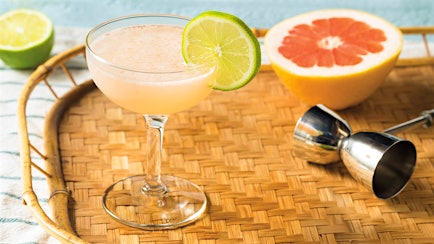
The Margarita
2 oz. 100-percent-agave Tequila
3/4 oz. orange liqueur (triple sec or orange curaçao)
3/4 oz. fresh-squeezed lime juice
1/4 oz. simple syrup or agave syrup
Coarse salt garnish
Shake over ice in a mixing glass. Wet the rim of a coupe with lime juice and dip it in salt. Strain the mixture into the glass.
For The Purist
While Tequila figures in a number of tasty cocktails, its utmost expressions deserve closer inspection on their own. Here are several top-of-the-line Tequilas that pair well with a cigar.
Marqués de Casa Noble Añejo This is a smooth blend of 12 extra añejo and nine añejo Tequilas that focuses on cocoa, vanilla and fruit flavors with a hint of nuts. It’s excellent at finding dormant sweetness in otherwise toasty, full-bodied cigars.
Tears of Llorona This one is scarce, but worth the effort to find. Aged in Scotch, Sherry and brandy casks, the Tears are understandably complex with notes like cinnamon, vanilla, cherry, ginger and cocoa. It deserves an equally intricate cigar.
Gran Patrón Piedra Fermented with the pulp and plant fiber together and copper-pot distilled, this extra añejo mixes spirits aged in both French and American oak. At once earthy and sweet with caramel, it is informed by hot peppers, butterscotch and cinnamon. Its long finish deserves the same from whatever you’re smoking.
Don Julio Real This extra añejo Tequila was introduced before that category was even created. It melds spirits aged with former American-whiskey barrels for three-to-five years to achieve notes of citrus, vanilla, chocolate and nuts that befit a mild-to-medium cigar.
Casa Dragones Joven While joven means young, the unaged component of Casa Dragones is blended with extra-old Tequila and then filtered for a clear appearance. It is consummately silky with vanilla and flowers and born to be paired with breakfast smokes.

The Rolls-Royce Margarita
When a cocktail reaches classic status, enthusiasts start to polish their order in every aspect: they specify each ingredient down to the garnish, they argue about ice shape, they obsess about ratios. The Rolls-Royce Margarita is Tequila’s incarnation of that phenomenon—and when you trick out your personal favorite, there is a lot of room for being specific:
Spirit As it informs most of the drink, the spirit expression deserves careful consideration. Tequila terroir is limited to the five regions where it can legally be distilled. Many focus on the Highland (Los Altos) and Lowland (El Valle) subregions of Jalisco. The former area, with Tequilas like El Tesoro and Cazcanes, typically renders more fruity, floral notes. Examples from the Lowlands, such as Herradura and Jose Cuervo, can be earthier and herbaceous. Whiskey lovers debate column stills versus pot, but Tequila freaks recognize artisanal, clay-pot methods that produce mineral notes.
Most spirits are distinguished by aging. Blanco (unaged) Tequila shows off the clean, agave spirit stripped to it basic attributes. Reposado (aged in oak two months to a year), añejo (a year to three years) and extra añejo (three years and older) are mellower with vanilla and caramel charms. But remember, price isn’t everything. Extra añejos are necessarily top shelf. But if you don’t like barrel flavor, why pay more?
Liqueur Ignore this component at your own risk. Most Margarita recipes call for triple sec, a sweet orange-peel liqueur. What makes specific brands different is how they get their flavor. Go bottom shelf and you’re likely to get a compound of alcohol and flavoring. With a top-shelf choice like Cointreau, the peels are introduced during double distillation. Grand Marnier uses Cognac for its alcohol portion. Combier undergoes a triple distillation.
Curaçao is another choice. Derived from the Laraha orange, which is closely associated with the Caribbean island of the same name, it is sometimes made with rum and is spicier and not as dry as triple sec. (Pierre Ferrand Dry Curaçao is one high-quality example.) Avoid the kind that is dyed blue—it just looks spooky and will ruin your drink.
Fruit Juice For the lime juice component, the key is to fresh squeeze. While the bottled type is easier, more consistent and keeps longer, it lacks brightness and can taste artificial because of additives. And by no means should you use a powdered mix. Apply the elbow grease to fresh limes and keep your Rolls-Royce Margarita running smoothly.
Persian limes are the most convenient. They are prevalent, large and easy to work with. But Key and Mexican limes, while smaller and not as juicy, have a more vibrant flavor. If you see them turn yellow, you know they are ripening.
Sweetener Simple syrup (half water, half sugar) is the standard sweetener. The questions can be “how much?” or “do you really need it?” It depends on your sweet tooth, but you might want to start with low dosages (the liqueur is pretty sweet to begin with) and add to taste.
The concierge level for sweetener is using agave syrup instead of sugar. As it is made of the same source, it naturally aligns with the Tequila. The McConaughey family recipe goes a step further and uses agave syrup as its sole source of sweetness, with no orange liqueur at all. Examples made this way are sometimes called the Tommy’s Margarita, named after a restaurant in San Francisco.
Alternatively, we hear tell of Margaritas built with grenadine (colored, sugar syrup). No, no, again no. It brings nothing to the drink but an artificial tinge.
Ice This is a drink that needs to be cold, but we eschew versions made with cracked or crushed ice and don’t even consider the slushy type as a real Margarita. The reason is that when you make a top-drawer drink like this, you don’t want to water it down. Best to make it over cubes in a shaker and strain the ice. Today’s fashion is for glasses with wide bowls. With those you may end up needing to add small cubes to keep the chill going. A better approach is to serve the drink in a smaller coupe, which will stay cool until you need to refill.
Garnish The lime wheel, split and hung from the side of the glass, is for little more than show, so you can dispense with it. The salt on the glass rim, on the other hand, is required. It serves the purpose of enhancing the flavor by stimulating the taste buds. But avoid table salt, with its iodized flavor. Use lime juice to wet the rim of the glass before sticking it into kosher or sea salt.
Building your own personal Rolls-Royce may take some time and experimentation, but in the end it will pay dividends. Or as McConaughey is fond of saying about his Tequila: “It’s the best thing we’ve made with our pants on.”