Riffing On Cocktail Classics

Some mixology theorists have posited that—like plots in the theater world—there are only a handful of basic cocktails and the hundreds of others are just variations on a theme. Considering the number of drinks that simply change proportions, exchange garnishes or appear in a different glass, but masquerade under a different moniker, there’s a certain logic to that. But then there are the examples that take a classic quaff in a new and rewarding direction. Here are four tasty alternatives to familiar recipes that are worth considering as the thermometer rises.
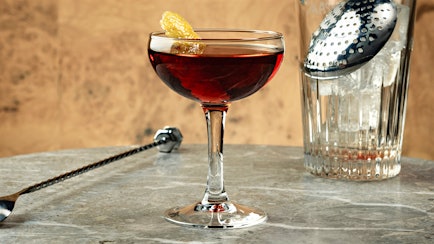
Hemingway Daiquiri
Ernest Hemingway had installed himself in Havana in 1932 while writing For Whom the Bell Tolls. As the story goes, one day he wandered into El Floridita on Calle Obispo and tried one of the bar’s famous icy Daiquiris. “That’s good,” he said. “But I prefer it without sugar and double rum.” The proprietor, following the specifications of the famous author, immediately produced what became the E. Hemingway Special, or Hemingway Daiquiri. From then on, the literary lion and the place that called itself la cuna del daiquiri (the cradle of the Daiquiri) would be forever connected. Hemingway’s preferred station at the end of the bar is even now chained off as an exhibit, with a statue of the man leaning over with a smile, envisioning a drink coming his way.
And that story pretty much holds water (well, Daiquiri). It’s not hard to believe that the corpulent and bibulous Hemingway (he set the bar’s record, downing 17 Daiquiris) would want to avoid sugar and double up on spirit. What isn’t true is that what we enjoy today as a Hemingway Daiquiri sprang straight from the brow of the writer. That mix would have been too tart and liquored up for the average taste. Indeed, the modern concoction had a long labor before its birth. The midwife was the proprietor Constantino Ribalaigua, called El Rey de los Coteleros, or the Cocktail King. Known for his exacting measures (like hand-squeezing fruit to avoid the bitter oils of the pith), he doctored the drink over the years, adding sour grapefruit juice and maraschino liqueur for a touch of sweetness. The result is his El Floridita No. 3, also called the E. Hemingway.
While Ribalaigua was renowned for the Daiquiri, El Floridita was hardly its womb, no matter what you may read at the bar. The mixture is essentially a Sour (a family in mixed drinks taxonomy that includes anything that adds citrus and sweetener to spirit). The rum version was first called the Daiquiri at the turn of the 20th century by American engineers working, not in Havana, but in Playa de Daiquirí, near Santiago de Cuba. Furthermore, the concept already existed in the grog that English sailors (limeys) drank to ward off scurvy. What El Floridita did advance was the cause of the frozen Daiquiri, as Ribalaigua was one of the first to embrace the Waring blender. He used it to create his Daiquiri No. 4, a spinoff of the Hemingway called the Papa Doble—a welcome cooler in a torrid climate.
2 oz. white rum
1 oz. maraschino liqueur
1 oz. fresh grapefruit juice
¾ oz. fresh lime juice
Shake over ice in a mixing glass and strain into a cocktail glass. For the Papa Doble, double up on the rum and grapefruit juice and mix in a blender with ice.

Ward 8
If politics makes strange bedfellows, mixology can make delicious ones. In the fuzzy history of the Ward 8—a mix of lemon and orange juice with whiskey—the most repeated origin story is that it was invented when the political boss Martin Lomasney won an 1898 election to represent Ward 8 in the west end of Boston. The anomaly was that the man called “Mahatma” for his ability to deliver votes was a teetotaler and didn’t allow drinking in his political club house. So, the celebration and the cocktail’s birth would go on without him at a nearby hotel bar. Discrepancies and counter claims make the story dubious, but the turn-of-the-century setting is roughly correct.
The drink became popular enough that it survived Prohibition (which Lomasney curiously voted against), but often without an important constituency: orange juice. Lacking that extra fruit plank, the platform is essentially a Whiskey Sour sweetened and colored with grenadine—its own cocktail in name only. And one that looks like a Shirley Temple.
A liberal amount of ward heeling is in order. The oranges, like the lemons, should be freshly squeezed and sweet. Opt for Valencia or the tangier navel or blood oranges. The ambitious will make their own grenadine with pomegranates, but that is a process involving separating, blending and straining the seeds. It’s easier to examine ingredient labels and find something store-bought that approximates naturalness. While the original called for rye, Bourbon makes for a sturdy whiskey substitute. Because of its fruit juice content, the Ward 8 should be shaken instead of stirred. It can also be served as a highball, in a tall glass with ice and a splash of soda. A variant calling for lime juice in place of both lemon and orange is sometimes called the New Yorker, another reason for Red Sox fans to hate the Yankees.
2 oz. rye whiskey
½ oz. orange juice
½ oz. lemon juice
1 tsp. grenadine
Shake all ingredients with ice in a mixing glass. Strain into a cocktail glass.

Ramos Gin Fizz
Making a Gin Fizz requires egg whites, and with current high prices and short supply, it’s understandable to think twice before cracking eggshells to use only half of its contents. But if ever there was an albumin-worthy mixed drink, it’s the Ramos Gin Fizz. With its complexity, flavor, contributions from the dairy aisle and (depending on how much elbow grease you want to put into it) froth, this Fizz is a meringue in a drinking glass.
Popularized in the late 19th century when charged water became widely available, Fizzes occupy their own category, alongside cocktails, fixes, slings, high balls, sours and the like. By 1930, The Savoy Cocktail Book listed 27 variations. Perhaps because of their descriptive fizz, they were first considered breakfast fare, specifically hangover remedies meant to be downed quickly. This variation, invented as the New Orleans Fizz by Henry Charles Ramos in 1888, adds foam and a milkshake quality to the potion. Its popularity was so enormous that Ramos had to staff dozens of bartenders to meet the demand. This was mainly because the necessary shaking took so long (reportedly 12 minutes). That is also why modern bars are not overjoyed or flatly refuse when customers call for them. Rolling your own at home you can cut that time down quite a bit and gain a DIYers sense of pride and satisfaction.
Most of the ingredients in this special take on a Gin Fizz are household items: lemon, lime, egg, cream and sugar. However, orange flower (or blossom) water is not as common to a home bar setup, as few drinks call for it. Don’t skip it though, as this slightly earthy, orange tincture adds a lot of character. Once tried, you may find yourself looking for excuses to use it in other drinks.
What to do with the leftover yolks? Make eggnog.
2 oz. London dry gin
¾ oz. heavy cream
¾ oz. fresh lime juice
¾ oz. fresh lemon juice
¾ oz. simple syrup
Seltzer water
Orange flower water
1 egg white
Chill a Collins glass in the refrigerator. Dry shake (i.e., shake without adding ice) gin, cream, juices, egg white and simple syrup in a mixing glass until thoroughly frothed, or, if you don’t have 12 minutes to spare and aren’t looking for a workout, use an immersion blender to speed up the process. Add ice and shake again to break up the cubes. Pour the frothy mixture over about an ounce of seltzer water in the Collins glass. When the head reaches the top, let sit, then use a straw to poke to the bottom. Delicately add more seltzer water to create a soufflé above the rim.

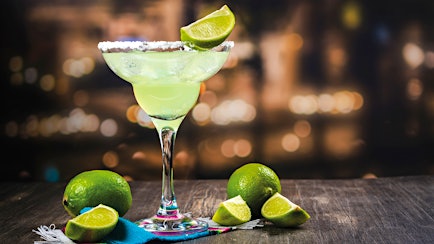
Spicy Margarita
Just like the Daiquiri, the Margarita is saddled with a number of variations that go by the same name and claim to be riffs on the original Tequila cocktail. But when does a cocktail cease to be a riff and become a separate drink? Possibly when the defining flavor goes far afield of the original concoction. In the case of the Margarita, a mix of Tequila, lime and orange liqueur, knockoffs made with banana, cherry, pumpkin or chocolate syrup do not deserve the name just because they contain Tequila in a similar glass. But this may be semantic nitpicking about a ship that has already sailed.
Fortunately, a twist on the Margarita exists that can proudly claim the title while delivering enough variation that it can stand on its own. This is the Spicy Margarita. It starts with the basic cocktail and changes none of the original ingredients, but simply adds an extra touch of South of the Border with pepper or chile.
Many claim to have invented the Margarita sometime in the 1930s and their formulæ are similar: an icy, citrus (lime or lemon) drink with Tequila and orange syrup or liqueur. In that margarita is Spanish for daisy, it suggests inspiration from a family of drinks of the same name. But Brandy and Gin Daisies aren’t ordered much anymore. In modern mixology, the Margarita is best described as a Sidecar made with Tequila in place of Cognac. Selecting a particular Tequila has become more important as the options for pure agave Mexican spirit have widened in the 50 or so years since the market was flooded with mixto, a blend of agave spirit with grain alcohol, which should be avoided entirely when making fine cocktails. Also key is the orange infusion. A Skinny Margarita might call for less caloric orange juice, but don’t skimp on the quality liqueur (triple sec): try something good, such as Grand Marnier, Cointreau, Combier or Pierre Ferrand Dry Curaçao.
To take the drink up a notch, you add spicy heat to the cooling cup. This comes in two elements: the seasoning that goes on the rim in place of salt and the peppers or chiles that are muddled in the building of the drink. Tajín Clásico, a brand of salt-and-pepper-like seasoning, combines chile, lime and sea salt and comes in a wide-mouth container with which it’s easy to apply the rim. The choice of what to muddle should be based on your taste and ability to withstand the heat as you climb the upper regions of the Scoville meter. Jalapeño peppers are the typical go-to, Habaneros are considerably hotter, but the concierge level is reached with Hatch chiles (see Cigar Aficionado, August 2020). However, that sweet and earthy chile isn’t in season until August. Can you wait that long?
2 oz. reposado 100 percent agave Tequila
2 slices cored jalapeño pepper, or 2 chopped Hatch chiles or one slice Habanero
½ oz. quality orange liqueur (triple sec)
1 oz. freshly squeezed lime juice
½ oz. simple or agave syrup Tajín Clásico
Muddle pepper or chiles in a mixing glass. Add Tequila, orange liqueur, lime juice and sweetening syrup over ice. Shake to chill well. Dip the moistened rim of an Old-Fashioned glass in the Tajin and add ice cubes. Strain the contents of the mixing glass over the rocks.