The Customized Gin & Tonic
Blame it on science. When cures for malaria came along, the point of adding tonic to gin was no longer the big blast of quinine that treated, but didn’t heal, the symptoms of the disease. It became a simple drink mixer, so bottlers started backing off the bitter alkaloid made from cinchona bark and emphasized the sweetness that the mass market seems to crave. But for those seeking authentic tonic to mix with their gin, the cocktail revival has brought retro quinine waters like Fever-Tree, Q, Fentimans, Stirrings and Jack Rudy, (a syrup to which you add seltzer to taste). The most intrepid will conjure custom quinine tonic to match their taste.
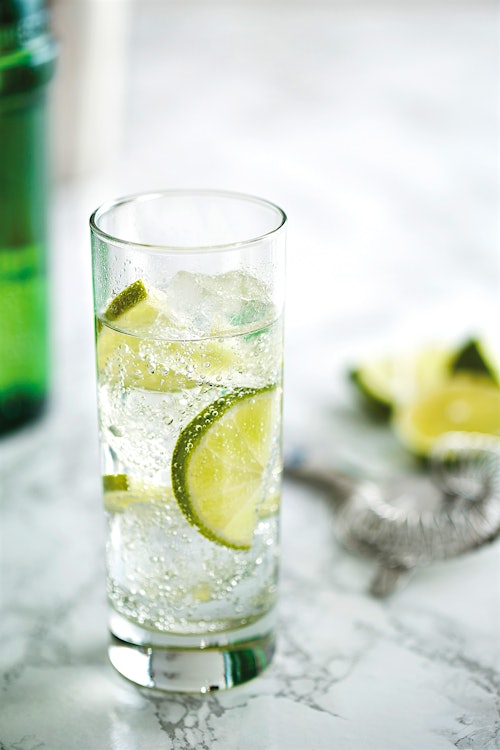
At its simplest it’s not hard, although it takes planning ahead and experimentation. Of course, you’ll want to source natural ingredients. Combine four cups water and three cups cane sugar in a sauce pan and bring to a boil. Set on low. Add three tablespoons powdered cinchona bark (search the Internet), a quarter cup citric acid, three stalks of chopped lemongrass and the zest of a lemon or lime. Stir and let simmer for a half hour. Cool and strain through a coffee filter. (You may want to do this several times for aesthetic purposes: cinchona tints the mixture bronze, quite unlike the gin and tonic in the photo.) You will end up with a quinine tonic syrup, which will keep up to a month in a glass container. To serve, mix a tablespoon with gin in a glass and add ice and seltzer to taste.
Some on a quinine quest have been known to take it to extremes, however—as does Robby Younes, wine director at Crystal Springs Resort, in Hamburg, New Jersey. As well as wine, he enthuses over gin. He’s tried 300 and is at work on his own concoction. Younes makes three different tonics intended for spring (honey emphasis), summer (floral) and fall/winter (juniper). And he goes to the ends of the earth to source components. A typical recipe starts in France with Vittel water. For cinchona, he looks to northern Peru, but, as a cigar smoker, Younes grinds it himself from the tree bark and then gently barbecues it with the cedar used to wrap cigars. His citric acid comes from Israel, and he adds cardamom seeds from Lebanon. Thailand supplies his lemongrass. For zest, he goes to Mexico for limes, lemons and grapefruits. Many hobbyists use allspice berries. Younes’ come from the west (not the east, thank you) of India. In summer, he might add lavender from the south of France. The juniper, for his winter mix, comes from perhaps the most esoteric locale of all: a bush growing near the parking lot of his local Starbucks. Try finding that one on the Internet.