Kennedy And Cuba: The Final Secrets

In the late summer of 1962, as part of a covert program known as Operation Mongoose, the CIA initiated an audacious act of clandestine economic sabotage against Cuba. After learning that a British freighter carrying approximately 16 million pounds of raw Cuban sugar to Odessa would dock in Puerto Rico for repairs, CIA officials quickly arranged to surreptitiously contaminate 800 sacks of the sugar with a chemical used to denature alcohol.
The operation, which came to light as part of the declassification of documents surrounding the John F. Kennedy assassination, was intended to ruin the reputation of Cuba’s prized, sweet export. A secret/sensitive/eyes only after-action report read: “When this cargo of sugar is refined in the Soviet Union, the contaminated bags will completely contaminate the entire shipment making the sugar unfit for human or animal consumption in any form.” It went on to claim that the contaminant is “so strong . . . that it ruins the taste of the consumer for any food or drink for a considerable future.” But, in the end, the contaminated sugar shipment never reached the Soviet Union.

This Cold War gastronomical dirty trick, described by the CIA as “one of the most tightly held of our Cuban activities,” was part of a wealth of details about CIA covert operations involving the island nation revealed in March of last year per an executive order signed by President Donald Trump. The subject of the 80,000-page data dump was the Kennedy assassination. However, numerous declassified documents also describe the extensive CIA espionage network that existed within Havana as well as a covert relationship with Mexico aimed at undermining Cuba. The records also provide new detail on plots to assassinate Fidel Castro in the first years after his revolution overthrew the Batista dictatorship in Cuba.
The final release of records was mandated by the President John F. Kennedy Assassination Records Collection Act. Thirty-three years after Congress passed the declassification law—enacted in 1992 in response to public outcry over Oliver Stone’s conspiracy-laden movie JFK—the final 80,000 pages of records have been made public, completely unredacted.
Predictably, the final secrets in the files reveal little to challenge the accepted history that a lone gunman named Lee Harvey Oswald assassinated the president in Dallas on November 22, 1963. But the records often concern Cuba—a country that figures prominently in multiple conspiracy theories concerning the assassination. The unexpurgated papers name names of covert operatives, informants, assets and collaborating countries. They expose espionage techniques and budget expenditures.
Since 1998, when the phased release of millions of pages of documents began under the JFK law, the records have revealed details of previously unknown covert operations against Cuba. With the top-secret documents of the JFK collection finally declassified in full, the infamous history of U.S. covert operations against Castro’s Cuba is now virtually complete.
Target Cuba
In the annals of U.S. foreign policy, the CIA’s Cuba operations are the stuff of legend: assassination plots, paramilitary invasions, espionage and economic sabotage among them. Such famous code names as “Operation Mongoose,” “ZRRIFLE,” and “Operation Zapata” (the paramilitary assault at the Bay of Pigs organized by the CIA) are engrained in the folklore of U.S. clandestine history. The debacle of the April 1961 Bay of Pigs invasion put the Agency’s regime change efforts squarely in the public spotlight. A Senate report on CIA assassination plots exposed the sinister history of covert attempts to “liquidate” Fidel Castro, with poisoned cigars, exploding seashells and a ball-point pen with a hidden hypodermic needle, which was passed to a high-level Cuban mole on the very day President Kennedy was shot in Dallas.
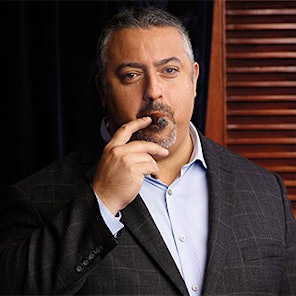
Initially, the CIA viewed Castro as a potential Cold War ally. During Castro’s first post-revolution visit to the United States in April 1959, the CIA arranged a secret meeting at the Statler Hilton hotel in Manhattan. An intelligence officer named Gary Droller spent three hours smoking cigars with the Cuban comandante, while lecturing Fidel on the evils of international communism. A secret CIA report on their conversation described Castro as “a new spiritual leader of Latin American democratic and anti-dictator forces.”

This erroneous impression changed as Castro began to expropriate properties of U.S. corporations, introduce agricultural reform and welcome a Soviet delegation to open economic ties with the USSR. In March of 1960, President Eisenhower authorized the CIA’s top-secret “Program of Covert Action Against the Castro Regime,” a program that evolved into the Bay of Pigs invasion.
At that time, the U.S. Embassy in Havana was still open—and the CIA’s Havana station was still operating inside of it. The Havana station, according to a once-secret history of the agency’s Western Hemisphere division, consisted of Chief of Station James Noel, Deputy Chief of Station Arthur Avignon, six operatives and six secretaries. In September 1960, Cuban authorities caught three members of the Agency’s Technical Services Division as they were installing microphones in the ceiling of the New China News Agency in Havana. The failed operation, code named STESCALADE, became the subject of a detailed briefing paper to CIA Director Allen Dulles. “The three technicians traveled to Cuba as tourists, under very light commercial cover,” the summary of the operation reported. “In each case the cover company consists of a telephone answering service and a name on the door.”
As the CIA geared up for its assault on the island, the station was poised to play a supporting role, but on January 2, 1961, Castro denounced the embassy as “a nest of spies,” and ordered most U.S. personnel to leave. The Eisenhower administration responded by breaking diplomatic relations with Cuba. The CIA station personnel had only 48 hours to burn documents, destroy technical equipment, cache radios for future clandestine communications and pass final payments to its network of Cuban assets. On January 4, 1961, almost all of the intelligence operatives evacuated Cuba via ferry to Key West.
Covert efforts to overthrow Castro would continue from a CIA station in Miami. Code named JMWAVE, it eventually became the largest agency station in the world. But the closure of the Havana station and the failure at the Bay of Pigs created an institutional crisis for the CIA. Both Director Allen Dulles and Deputy Director of Plans Richard Bissell were relieved of their duties and the agency faced extreme limitations on its covert action and intelligence-gathering capabilities against Cuba. “Following the misfortune at the Bay of Pigs there was a decrease in the clandestine effort against Cuba,” conceded a top-secret internal report to the new CIA director, John McCone. It placed the blame, however, on the Kennedy White House. “Specific policy guidance was not given to CIA and funds necessary to carry out expanded programs were not approved by higher authority [the president] until August 4, 1961.”
The limitations were short lived. Under McCone’s new leadership, the CIA began to rebuild and intensify its covert action and intelligence gathering in Cuba. In March 1962, the CIA established “Task Force W,” a special unit for “the purpose of mounting a maximum effort, particularly in the collection of information, against Cuba.” A legendary, gun-toting former FBI agent named William Harvey was appointed to lead the new Cuba division. Initial staffing totaled 335 people, but the number of personnel soon expanded, along with funding allocations for operations targeting Cuba.
Declassification of long-secret budget expenditures as well as specific numbers on CIA assets, reflect how the agency expanded its Cuba operations. “Actual expenditures in FY 1961 illustrate the disparity between Cuba operations and the parent WH [Western Hemisphere] Division,” the CIA’s historical office reported. More than $41 million was spent that year on Cuban operations, “or almost four times the $11 million spent in the rest of Latin America.” Much of that budget went to the Bay of Pigs operation and its aftermath.
Cuba continued to dominate the budget even after the Bay of Pigs. The documents show Cuba-related expenditures of more than $17 million in the following year and $28 million for fiscal year 1963, the latter equivalent to $290 million in current dollars. Fueled by this major investment, the CIA had by mid-1963 established a large network of “CIA assets being used against Cuba” that totaled more than 1,000 individuals. The agency also devoted considerable resources to expanding its espionage network of spies operating on the island and in Cuban Embassies around the world.

“There are 108 agents in Cuba, including friendly diplomatic personnel,” CIA officials reported to the White House in September 1963. “There are two illegal teams working, one of which has 200 sub-agents. There are 44 legal travelers working; 60 agents in Cuban shipping; and there are 31 penetrations of Cuban installations abroad.” The documents reveal that among those recruited were the chief gardener at the U.S. base at Guantanamo, several military officers and at least a dozen diplomats the agency was running as “controlled agents.”
But by far the most astonishing Cuban-turned-CIA-spy was Fidel Castro’s sister, Juana de la Caridad Castro Ruz. Documents released under the JFK Act revealed how the CIA first recruited Virginia Leitao de Cunha, the wife of Brazil’s ambassador to the Soviet Union, and sent her to Havana to make the first approach to Juana Castro in June 1962. “Juanita,” as Castro’s sister was known, agreed “to provide intelligence on the Cuban political leadership and to work against the Cuban communist regime,” according to a report to the CIA director. She would, however, stop “short of engaging in activity which might result in direct personal harm to her brothers, Raúl and Fidel.” Juanita also agreed to meet “the Americans” in Mexico where the CIA provided her with secret communications instructions and gave her the code name Donna.
Operation Lienvoy
Mexico proved to be fertile foreign ground for the CIA’s anti-Castro operations. Publicly, Mexican authorities voiced support for the Cuban revolution, rejecting U.S. pressure to break relations with the Castro government. Secretly, however, a succession of Mexican presidents actively assisted the CIA’s covert efforts to spy on and mount operations against Cuba, and other Cold War targets in Mexico City—through an ultra-clandestine electronic espionage operation code named LIENVOY. “The LIENVOY operation resulted from an approach six years ago from President [Adolfo] López Mateos,” reads a top-secret 1964 CIA survey of operations in Mexico. “After considerable discussions, the operation was approved, providing the Mexican government would include Soviet and Satellite targets . . . to be of concern to the United States.”
“For across-the-board coverage of Cuba in the early 1960s the Mexico City Station was tops,” according to the history on Western Hemisphere operations. The CIA managed to install seven microphones inside Cuba’s embassy, including in the leg of the coffee table in the Cuban ambassador’s office. “We intercept their mail, photograph all the people who go in and out of the embassy, cover their telephones completely, and within a few hours of the conversations have resumes of all the phone calls,” the CIA station chief reported in February 1963. “We cover their trash, and this has been found to be useful.”
One of the people the CIA photographed going in and out of the Cuban Embassy was Lee Harvey Oswald, who traveled to Mexico in late September 1963. The LIENVOY surveillance operations also intercepted the Cuban Embassy telephonic communications on Oswald’s request to travel to Havana and obtain a visa to return to the USSR. During the Warren Commission investigation, agency officials deliberately obfuscated how they obtained that information to protect its LIENVOY espionage program from exposure. The cover-up of the LIENVOY Mexico operations, however, fueled conspiracy theories that the CIA was trying to hide alleged ties to Oswald.

Mongoose and the Missile Crisis
Mexico was not alone in assisting CIA operations against Cuba. By late 1962, the JFK papers reveal, the CIA had cooperative “liaison” relations with 14 other intelligence services on Cuba operations: the British, Dutch, French, Spanish, Italians, Greeks, Norwegians, Danish, West Germans, Argentinians, Uruguayans, Canadians, Chileans and Israelis. “We will endeavor to induce all of the liaison services to make greater use of their national assets, both inside and outside of Cuba,” Task Force W Chief William Harvey wrote in a top secret-sensitive planning paper. “Particular attention will be given to possible utilization of the Vatican.”
Harvey’s “Operational Plan for Continuing Operations Against Cuba” evaluated the post-Cuban Missile Crisis environment for future covert action. The crisis had concluded with a public accord between the White House and the Kremlin: a U.S. “no invasion pledge” in return for Moscow’s commitment to withdraw the missiles and refrain from reintroducing nuclear weapons into Cuba in the future. The no-invasion assurances “constitute giving to Castro and his regime a certain degree of sanctuary,” Harvey complained, damaging the morale of Cuban exiles, and creating difficulties for sustaining covert operations against Cuba. Still, he correctly predicted, “Higher Authority probably will continue heavy pressure on the CIA for a maximum effort against Cuba.”
In the wake of the Bay of Pigs fiasco, President Kennedy approved a new set of aggressive operations against Cuba in the fall of 1961, code named Operation Mongoose and appointed his brother, Attorney General Robert Kennedy, to chair the committee created to oversee a multi-agency effort to undermine the Castro regime.
Along with the Pentagon, State Department, National Security Agency, Treasury and U.S. Information Agency, the CIA played a key role in Mongoose, particularly the first phase of obtaining more intelligence on the ground. The agency infiltrated two covert teams onto the island (code named COBRA and AMTORRID) to send a steady stream of intelligence reports. Agency operatives also engaged in various forms of economic sabotage, from harassment efforts to contaminating shipments of lubricants to Cuba that would foul industrial machinery, to violent hit-and-run coastal raids on smaller economic installations.
But the most audacious Mongoose effort to damage Cuban economic infrastructure took place in the middle of the Missile Crisis. A two-man infiltration team attempted to bomb machinery at the Matahambre copper mine in Pinar del Río in late 1962—despite White House instructions to the CIA to “stand down” on covert activities in Cuba while Kennedy and Khrushchev attempted to avoid nuclear Armageddon. General Lansdale and Robert Kennedy claimed not to have known of the operation; declassified JFK papers indicate Harvey had informed them. The episode led to ill-blood between the attorney general and the chief of Task Force W.
Amtrunk and Amlash
Soon after Harvey submitted his planning paper for Cuba operations in late November 1962, CIA director John McCone reassigned him to be station chief in Rome. The veteran CIA officer Desmond FitzGerald replaced Harvey as head of the Cuba unit, renamed the “Special Affairs Staff” (SAS). Under FitzGerald’s leadership, SAS stepped up its covert activities, particularly on “executive action”—the secret attempts to “dispose of Castro.”
One of the earliest plots had called for using cigars as an assassination device. The JFK declassification finally revealed the identity of the CIA officer responsible for doctoring the cigars—Ray Treichler, who would become head of the Biological Branch in 1961. “Treichler remembers experimenting with some cigars and then treating a full box,” the unredacted CIA history on attempts to kill Castro reported:
“He is positive, though, that he did contaminate a full box of fifty cigars with botulinus toxin, a virulent poison that produces a fatal illness some hours after it is ingested. Treichler distinctly remembers the flaps-and-seals job he had to do on the box and on each of the wrapped cigars, both to get at the cigars and to erase evidence of tampering.”

In early 1963, FitzGerald initiated two more plots to assassinate Castro, one that would employ an exploding seashell and the other using a diving wetsuit contaminated with botulism to be delivered as a present to Fidel. Like the cigars, these schemes went nowhere.
Most significantly, FitzGerald sought to activate the top CIA mole inside the Cuban military, Major Rolando Cubela—aka AMLASH. Cubela became the central player in a CIA effort to “split the regime” and foment a military coup against Castro—a covert operation assigned the cryptonym AMTRUNK.
FitzGerald tasked Nestor Sanchez, a young agent of Spanish descent, to meet with Cubela in Brazil in September 1963. On October 5, they met again in Paris and Sanchez pressed Cubela to commit to leading the coup plot. Several weeks later, FitzGerald himself traveled to Paris to meet Cubela, posing as a high U.S. official close to Attorney General Robert Kennedy. The two discussed weapons Cubela wanted to use to assassinate Castro, preferably a long-range sniper rifle.
Instead, Nestor Sanchez returned to Paris with a more discreet weapon—a ballpoint pen rigged with a hidden hypodermic syringe. “The idea was the needle would be so fine that it would be just like a tiny scratch,” FitzGerald’s deputy, Samuel Halpern, stated in an internal interview released as part of the JFK papers. “[A]nd if AMLASH would get close enough to Fidel to use that to scratch him [the poison would] enter the bloodstream.”
Their clandestine Paris meeting took place on the afternoon of November 22, 1963. “It is very likely,” as a top-secret CIA Inspector General’s report on the plots dramatically pointed out, “that at the very moment President Kennedy was shot the CIA officer was meeting with a Cuban agent in Paris and giving him an assassination device to use against Castro.”
Presidential Oversight
Although highly relevant to the Warren Commission inquiry into the murder of President Kennedy, the CIA never divulged its Castro assassination efforts. A major Senate investigation in the mid 1970s on “Alleged Assassination Plots Involving Foreign Leaders” first exposed them; the Kennedy Assassination Records Collection Act has provided further uncensored documentation.
But those documents do not answer an important question: did President Kennedy know, and approve, of the plots to assassinate Castro? Perhaps the topic was too sensitive and too overtly criminal to discuss.
The documents do reveal Kennedy’s micro-management on individual covert operations against Cuba. In an April 1963 Special Group meeting, the president’s national security advisor, McGeorge Bundy, advised that a proposed program of sabotage and harassment had been “developed more or less at the direction of higher authority”—a reference to the president. In the summer of 1963, Kennedy postponed two proposed “external sabotage operations” planned for July 26—a celebrated day in the history of the Cuban revolution—so as not to disrupt favorable negotiations he was conducting with the Kremlin. In November 1963, the Special Group approved three operations “subject to higher authority concurrence.” The next day, the president “disapproved” two of those operations.
This extraordinary presidential oversight of covert operations in Cuba reflected Kennedy’s post-Bay of Pigs distrust of the CIA, distrust that was reinforced by his experience with “the great sugar-sabotage operation.”

After the CIA had contaminated the 800 sacks of sugar on August 24, 1962, they briefed the White House. But Kennedy overruled the action and ordered the CIA to prevent the adulterated sugar shipment from reaching the Soviet Union. The president appeared not to believe the CIA’s assessment that the chemical contaminant would not sicken Soviet consumers. Furthermore, introducing chemical warfare into the food chain would set a dangerous precedent—a precedent that could open the door to KGB retaliation against U.S. consumers.
Kennedy’s orders forced another covert operation to undo the first one. It took a year-long, creative, clandestine effort for the CIA to block the sugar from being shipped to Odessa and then make it disappear. Covert operatives, port and customs authorities, Puerto Rican lawyers and CIA-backed commodities brokers were all mobilized to assure the offloaded 14,000 bags of sugar would not be reloaded. On behalf of Miami Cubans, a lawsuit was filed in a San Juan court claiming the sugar should be seized as compensation for the private property expropriations carried out by the Castro regime. The cargo was effectively confiscated as those legal claims were assessed.
The CIA set up “cover companies” to purchase the seized sugar cargo. “Plan for disposing of the 14,000 sacks of sugar in Puerto Rico was discussed,” CIA director John McCone reported on a May 1963 meeting of the “Special Group” that oversaw covert operations. “I explained the actions being taken by the DDP [Deputy Director of Plans] . . . . The 800 bags in question would be disposed of.”
A full year after the original sabotage operation, another top CIA official provided the special group with a final update “on the operation to remove and destroy the . . . contaminated sugar.” The briefing covered the details from initiation of negotiations for purchase until completion of the dumping at sea, according to the secret summary. “The Group expressed its satisfaction with the operation.”
Peter Kornbluh is co-author of the book Back Channel to Cuba.