There's Nothing Like a Great Cigar Merchant
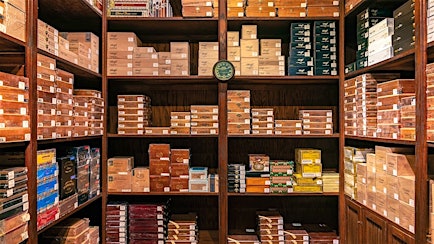
Everyone needs a great cigar merchant. I frequent a number around the world: four in Havana, two in London, one in Geneva, one in Hong Kong and one in Bordeaux. Regardless of where they are located, they are all important in my pursuit of the good life, which always includes a fine cigar.
I first met my two favorite cigar merchants in 1983. I was just a few years out of graduate school and traveling around Europe with my first wife. I was keen to pick up some Cuban cigars along with some Dunhill pipes during my travels, and London was the center of the earth for a smoker (it still is).
I will never forget the first time I set foot in Desmond Sautter's shop on Mount Street near the U.S. embassy. I timidly walked in the door with an almost guilty look on my face. I was not sure what to say or what I wanted to buy. I wasn't even sure that I could afford anything. Yet, there, behind the counter, in his small cozy store, stood Desmond Sautter smartly dressed in a dark blue pinstriped suit with a white-and-red striped shirt and a blue tie. He had a huge grin, the kind of smile your favorite uncle might have had when you were a teenager and he was ready to lead you astray with booze or some other vice. "What can I do for you today, young man?" Sautter said.
I told him that I was a journalist from the States working for a wine magazine and I was in London to do some stories as well as learn more about cigars and pick up a pipe or two. "Well, you better try one of these cigars and tell me what you think," he said after a few minutes of light chatter. It was a petit corona, a small cigar produced in the mid-1950s before Fidel Castro took power in 1959. I can't remember the brand but I do remember the smoke. It was glorious. Smooth, succulent and mellow, smoking it was like wearing a silk scarf: it caressed every inch of my mouth.
Sautter had a handwritten sign in his window advertising the cigars for £1 apiece, about one-third the price of a new cigar at the time. He said that he had thousands of pre-Castro cigars, and he couldn't get rid of them. "Nobody seems to want them, but I think they are better than new cigars," he said, shaking his head in disappointment. If he had all those pre-Castros today, he would be a very rich man indeed. I bought a handful of the pre-Castros and a Charaton pipe and said goodbye, but I knew that I would be back one day. In fact, I have been coming back ever since.
It's a similar story with Davidoff's Edward Sahakian in London. On the same trip, I stopped by his shop in St. James's. It was sleek and modern, with "Davidoff" embossed in gold on the windows and doors. It was all a little bit too grownup for me. I was terrified to open the door; walking in was almost unthinkable. But I took a deep breath and went through the doors. The handsome and suave Sahakian, dressed in a dark brown Savile Row suit and a blue shirt and red tie, was helping another client, but he quickly walked over to me and asked what he could do when he was finished.
I explained who I was and what I was doing in London and that I was fascinated by how Davidoff cigars had the names of Bordeaux chateaus. He spent about 10 minutes explaining the entire story and then proceeded to give me a Chateau Haut-Brion.
It's this solid advice and good service that keeps me coming back to Sahakian and Sautter, and the other cigar shops I frequent. Good cigar merchants live their jobs. They take great pleasure in supplying their customers with the best cigars possible. And we, as cigar lovers, get great pleasure from them.
"I used to run a company in Iran in the 1970s with more than 5,000 employees," says Sahakian, who ran all the breweries in the country before the end of the last Shah's reign. "It was a nightmare. Selling cigars is such a pleasure by comparison."
Sautter was in banking originally but in the 1960s bought a couple of pipe shops that also sold cigars. "I quickly realized that cigars were the future for me," he says. "I could see that all my customers for pipes were dying off. I needed younger customers."
Today, the two men are as bullish as ever on the cigar industry despite a decline in their business due to the slide in the economy and the end of the cigar boom. However, they are still doing very well. Most of their sales are in Cuban cigars, although the percentage of non-Cubans they sell is growing. For the last three or four years, they have had problems with the quality of Cuban cigars, just like everyone else. However, they believe that the situation is improving. They are seeing better quality cigars from Cuba and are getting just about every brand, size and shape they need.
"A few years ago, if I received 20 or 30 boxes of Hoyo de Monterrey Double Coronas, they would be sold out right away," says Sahakian. "I wouldn't even have to put them out on the shelves. Today, we have just about everything we need, but business is much slower."
Such a statement makes me wonder if the Cubans realize the situation in London as well as in most other key markets in the world. They recently announced that they would be shipping 170 million cigars this year, a huge jump from the 117 million they exported last year. They are going to need the help of merchants like Sahakian and Sautter.
However, as much as Sahakian and Sautter like Cuban cigars, they are not entirely happy selling them. For the last four or five years, they haven't visited Cuba. Instead, they have been going to the Dominican Republic. They are too discreet to say why they don't go to Cuba, but I have a hunch it's because they don't get the welcome they deserve. Years ago, when cigar merchants visited Cuba they were treated like royalty. Today, they are asked to pay for everything from cigar events to factory tours. They are not seen as ambassadors for Cuban cigars, as the front-line promoters of one of the greatest products on earth. Instead, they are seen as sources of income, whether they are selling Cuban cigars or visiting the island. That's wrong.
That said, however, Sahakian and Sautter will continue to sell Cuban cigars. Not because of their overwhelming affinity for the Cubans, but because of their dedication to the customers. Like all good cigar merchants around the world, they deserve praise for their work -- or better, a congratulatory cigar.
Everyone needs a great cigar merchant. I frequent a number around the world: four in Havana, two in London, one in Geneva, one in Hong Kong and one in Bordeaux. Regardless of where they are located, they are all important in my pursuit of the good life, which always includes a fine cigar.
I first met my two favorite cigar merchants in 1983. I was just a few years out of graduate school and traveling around Europe with my first wife. I was keen to pick up some Cuban cigars along with some Dunhill pipes during my travels, and London was the center of the earth for a smoker (it still is).
I will never forget the first time I set foot in Desmond Sautter's shop on Mount Street near the U.S. embassy. I timidly walked in the door with an almost guilty look on my face. I was not sure what to say or what I wanted to buy. I wasn't even sure that I could afford anything. Yet, there, behind the counter, in his small cozy store, stood Desmond Sautter smartly dressed in a dark blue pinstriped suit with a white-and-red striped shirt and a blue tie. He had a huge grin, the kind of smile your favorite uncle might have had when you were a teenager and he was ready to lead you astray with booze or some other vice. "What can I do for you today, young man?" Sautter said.
I told him that I was a journalist from the States working for a wine magazine and I was in London to do some stories as well as learn more about cigars and pick up a pipe or two. "Well, you better try one of these cigars and tell me what you think," he said after a few minutes of light chatter. It was a petit corona, a small cigar produced in the mid-1950s before Fidel Castro took power in 1959. I can't remember the brand but I do remember the smoke. It was glorious. Smooth, succulent and mellow, smoking it was like wearing a silk scarf: it caressed every inch of my mouth.
Sautter had a handwritten sign in his window advertising the cigars for £1 apiece, about one-third the price of a new cigar at the time. He said that he had thousands of pre-Castro cigars, and he couldn't get rid of them. "Nobody seems to want them, but I think they are better than new cigars," he said, shaking his head in disappointment. If he had all those pre-Castros today, he would be a very rich man indeed. I bought a handful of the pre-Castros and a Charaton pipe and said goodbye, but I knew that I would be back one day. In fact, I have been coming back ever since.
It's a similar story with Davidoff's Edward Sahakian in London. On the same trip, I stopped by his shop in St. James's. It was sleek and modern, with "Davidoff" embossed in gold on the windows and doors. It was all a little bit too grownup for me. I was terrified to open the door; walking in was almost unthinkable. But I took a deep breath and went through the doors. The handsome and suave Sahakian, dressed in a dark brown Savile Row suit and a blue shirt and red tie, was helping another client, but he quickly walked over to me and asked what he could do when he was finished.
I explained who I was and what I was doing in London and that I was fascinated by how Davidoff cigars had the names of Bordeaux chateaus. He spent about 10 minutes explaining the entire story and then proceeded to give me a Chateau Haut-Brion.
It's this solid advice and good service that keeps me coming back to Sahakian and Sautter, and the other cigar shops I frequent. Good cigar merchants live their jobs. They take great pleasure in supplying their customers with the best cigars possible. And we, as cigar lovers, get great pleasure from them.
"I used to run a company in Iran in the 1970s with more than 5,000 employees," says Sahakian, who ran all the breweries in the country before the end of the last Shah's reign. "It was a nightmare. Selling cigars is such a pleasure by comparison."
Sautter was in banking originally but in the 1960s bought a couple of pipe shops that also sold cigars. "I quickly realized that cigars were the future for me," he says. "I could see that all my customers for pipes were dying off. I needed younger customers."
Today, the two men are as bullish as ever on the cigar industry despite a decline in their business due to the slide in the economy and the end of the cigar boom. However, they are still doing very well. Most of their sales are in Cuban cigars, although the percentage of non-Cubans they sell is growing. For the last three or four years, they have had problems with the quality of Cuban cigars, just like everyone else. However, they believe that the situation is improving. They are seeing better quality cigars from Cuba and are getting just about every brand, size and shape they need.
"A few years ago, if I received 20 or 30 boxes of Hoyo de Monterrey Double Coronas, they would be sold out right away," says Sahakian. "I wouldn't even have to put them out on the shelves. Today, we have just about everything we need, but business is much slower."
Such a statement makes me wonder if the Cubans realize the situation in London as well as in most other key markets in the world. They recently announced that they would be shipping 170 million cigars this year, a huge jump from the 117 million they exported last year. They are going to need the help of merchants like Sahakian and Sautter.
However, as much as Sahakian and Sautter like Cuban cigars, they are not entirely happy selling them. For the last four or five years, they haven't visited Cuba. Instead, they have been going to the Dominican Republic. They are too discreet to say why they don't go to Cuba, but I have a hunch it's because they don't get the welcome they deserve. Years ago, when cigar merchants visited Cuba they were treated like royalty. Today, they are asked to pay for everything from cigar events to factory tours. They are not seen as ambassadors for Cuban cigars, as the front-line promoters of one of the greatest products on earth. Instead, they are seen as sources of income, whether they are selling Cuban cigars or visiting the island. That's wrong.
That said, however, Sahakian and Sautter will continue to sell Cuban cigars. Not because of their overwhelming affinity for the Cubans, but because of their dedication to the customers. Like all good cigar merchants around the world, they deserve praise for their work -- or better, a congratulatory cigar.